
Roshan Bhandari
Team Lead · Software Engineer · DevOps
Available for Projects
With Balen Shah as Prime Minister and Finance Minister Swarnim Wagle announcing Nepal's first sovereign AI compute center, a diaspora researcher fellowship, and hydropower-to-AI compute vision — is this the government Nepal's tech sector has been waiting for?
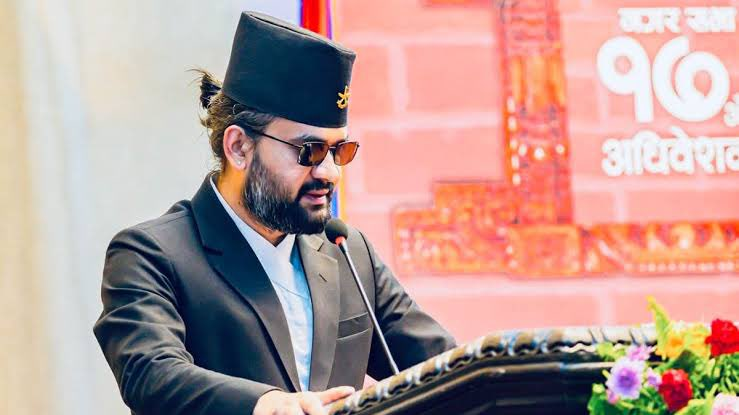
Nepal has had technology policy announcements before. Ministers have declared digital transformation goals in budget speeches for years. Committees have been formed, strategies drafted, task forces appointed. Very little of it produced anything you could point to and say: that changed what was possible for Nepali technology professionals.
The budget announcement made by Finance Minister Swarnim Wagle in the federal parliament feels different — not because government announcements deserve automatic optimism, but because the specific choices made in this budget reflect an understanding of where technology is actually going that previous budgets did not demonstrate.
A sovereign AI compute center. Hydropower converted into AI compute services. Diaspora researcher fellowships. Mathematics education as a national priority. These are not generic digital transformation talking points. They are specific, technically coherent interventions that someone who understands the AI landscape actually designed.
The question is whether the government that made these announcements has the institutional capacity and the political will to execute them. That is where Balen Shah becomes the central figure in the story.
Balen Shah's path to the Prime Minister's office is unlike anything in Nepal's political history. A rapper-turned-engineer who won the Kathmandu Metropolitan City mayoral race as an independent candidate, Shah built his political credibility not through party machinery or coalition dealing but through visible, measurable urban governance — demolishing illegal structures, opening footpaths that had been encroached for decades, introducing data-driven systems into a municipality that previously ran on personal relationships and paper trails.
What made Shah's Kathmandu tenure remarkable was not that he had a vision for the city — every politician has a vision. What made it remarkable was that he treated execution as a technical problem and tracked results with the kind of rigor that most Nepali government institutions have historically treated as optional. Outcome data was published. Targets were set and missed and reset. The approach was closer to a startup's operating cadence than a municipality's.
That disposition — towards evidence, execution, and discomfort with the gap between announcement and outcome — is precisely what Nepal's technology policy has lacked for most of its modern history. Budget speeches have been generous with AI language and stingy with implementation. Shah's background suggests a Prime Minister who will ask uncomfortable questions about the distance between what was announced and what actually happened.
Finance Minister Swarnim Wagle's budget speech contained several AI-specific announcements that are worth examining individually.
The announcement of a sovereign AI compute center in Syuchatar, Kathmandu, is the most significant in the budget. The government will purchase thousands of AI processing units — the GPU-class hardware that makes training and running AI models possible — and make this compute capacity available to Nepali AI companies and startups at subsidised rates.
Why does this matter? Because compute access has been one of the two genuine structural barriers to AI development in Nepal (the other being talent). Cloud GPU compute from AWS or Google is globally accessible but expensive — fine for experiments, prohibitive for sustained development work by cash-constrained startups and researchers. Subsidised sovereign compute changes the economics for the domestic AI ecosystem in a meaningful way.
The Syuchatar location is strategically coherent — the area already hosts significant government digital infrastructure, and placing AI compute near existing data centre facilities reduces the infrastructure build-out required.
The most elegant idea in the budget — and the one that reflects genuine systems thinking — is the conversion of Nepal's hydroelectric surplus into AI compute services. Nepal has been generating more electricity than its domestic grid can absorb during peak hydro seasons. This surplus has historically been exported to India at commodity rates.
The insight in the budget is that AI compute data centers are among the most electricity-intensive infrastructure in the world, and clean hydroelectric power is increasingly sought by technology companies committing to carbon neutrality. Nepal's clean hydro surplus, which currently earns commodity export rates, could earn significantly more as power for AI compute infrastructure — both for the sovereign center and for attracting private AI data centre investment.
Finance Minister Wagle framed it directly: "Clean hydroelectric energy will be converted into high-value AI compute services." This is not a metaphor. It is a value chain transformation — moving Nepal's electricity export up the value ladder from raw energy to processed compute. If executed, it represents a genuinely novel economic model for a hydro-rich developing country.
The budget commits to identifying at least fifteen Nepali researchers who have built international reputations in AI and bringing them back to Nepal through prestigious fellowships. The mechanism — fellowships rather than permanent appointments — is sensible: diaspora researchers are unlikely to give up their positions at MIT, Stanford, or Google DeepMind permanently, but many would engage with a funded, structured return program for a year or a semester.
The precedent here is Israel's return fellowship programs in the 1990s, which brought back diaspora mathematicians, engineers, and scientists who seeded the research culture at Israeli universities and connected Israeli startups to global networks. The scale is different — fifteen versus hundreds — but the principle is sound: diaspora talent is a resource that Nepal has dramatically underutilised.
The names are not yet announced, but the pool exists. Nepali AI researchers are present at significant levels in US and European research institutions. Some have been waiting for a reason to engage seriously with building something at home.
The budget's emphasis on mathematics education — identifying it as a subject deserving high priority in the AI era — is the least dramatic but possibly the most important long-term signal. The bottleneck for Nepal's ML engineering pipeline is not enthusiasm or programming ability. It is mathematical foundation: linear algebra, calculus, probability, and statistics. Students who arrive at university without these foundations spend their first year catching up rather than building.
A serious national push on mathematics education — starting from secondary school — would take a decade to show results in the AI talent pipeline. But the decisions that matter for Nepal's AI capacity ten years from now are the curriculum decisions being made today. Acknowledging this in a budget speech is not enough; the implementation — teacher training, curricula revision, assessment reform — requires sustained effort across governments. But naming it correctly is the beginning.
The choice of Swarnim Wagle as Finance Minister is itself significant context for the AI announcements. Wagle is one of Nepal's most credentialed economists — a former executive at the Nepal Rastra Bank, a development economist with international experience, and someone who has written and spoken extensively about Nepal's economic transformation. He has not been a typical Nepali finance minister whose AI fluency begins and ends with a briefing note from a ministry official.
The technical coherence of the AI budget announcements — the hydro-to-compute value chain logic, the sovereign compute model, the researcher fellowship structure — reflects a finance minister who understands what he is talking about. That matters because budget announcements made by officials who do not understand the domain tend to get operationalised poorly. The implementation bureaucracy takes an announcement and builds whatever it already knows how to build, regardless of what was intended.
A finance minister who can follow up with ministry officials, ask specific questions about procurement specifications and implementation timelines, and distinguish between a data centre that actually serves AI researchers and one that gets built for ribbon-cutting — that is a different dynamic than Nepal's technology policy has typically experienced.
Honest assessment requires holding both the genuine excitement about this budget and the legitimate reasons for caution.
Nepal's implementation track record is weak. The distance between what gets announced in a budget speech and what gets built is a consistent feature of Nepali governance. Broadband commitments, digital ID initiatives, e-government projects — the graveyard of ambitious technology announcements is well-populated. An announcement is the beginning of the process, not a guarantee of the outcome.
Procurement for AI hardware is complex and corruption-prone. Purchasing "thousands of AI processing units" involves technical specifications that most government procurement officials in Nepal are not equipped to evaluate. The risk of overpaying for inferior hardware, or procuring hardware that does not serve the intended use cases, is real. The success of the sovereign compute center depends on the quality of its procurement as much as the wisdom of the policy.
Political continuity is not guaranteed. Nepal's governments have historically been short-lived. Policies initiated by one government are frequently deprioritised or reversed by the next. The Balen Shah government's AI agenda is only as durable as the political coalition that supports it. Even with genuine commitment at the top, the bureaucratic systems required to implement these programs span multiple election cycles.
Fifteen researcher fellowships is a start, not a system. Bringing back fifteen diaspora AI researchers is meaningful. It is not the scale at which research ecosystem transformation happens. The program is a proof of concept that needs to compound — grow to fifty, then a hundred, then become a permanent feature of how Nepal engages its global talent — before it changes what is structurally possible.
The announcements in this budget will succeed if, two to three years from now, the following things are true:
The Syuchatar compute center is operational, accessible to researchers and startups at subsidised rates, and being actively used — not a building with hardware inside waiting for a governance framework that never got written.
At least fifteen Nepali AI researchers have completed fellowship engagements that produced tangible outputs: courses taught at Nepali universities, research papers with Nepali co-authors, companies advised, startups seeded.
At least one private AI data centre has announced plans to locate in Nepal, attracted by the combination of subsidised hydropower and government AI infrastructure.
Mathematics curriculum reform has advanced beyond the announcement stage and entered implementation in at least a pilot set of schools.
These are not ambitious targets. They are the minimum viable version of what was announced. A government that achieves the minimum viable version will have done more for Nepal's AI future than every previous technology budget combined.
The announcements in this budget are not self-implementing. The sovereign compute center needs technical advisors who understand what good AI infrastructure looks like. The researcher fellowship program needs a community that knows who the diaspora researchers are and can make introductions. The startup subsidy program needs clear criteria for who qualifies and what support looks like.
Nepal's technology community — developers, researchers, founders, the diaspora — has historically been a spectator of government technology policy rather than a participant in shaping it. That dynamic needs to change for this budget to produce its best possible outcomes.
The ICT Federation Nepal, the various developer communities, the university engineering departments, the Nepali diaspora in AI at international institutions — these groups collectively have the knowledge to help the government implement these programs well. Waiting for the government to figure it all out independently is a reliable way to watch another good announcement become a cautionary tale.
Prime Minister Balen Shah rose to prominence by treating city governance as a discipline with measurable outcomes rather than a platform for patronage. Finance Minister Swarnim Wagle has designed a budget that reflects genuine technical understanding of the AI landscape.
Together, they represent something Nepal has not had before in its technology policy — a government that seems to know what it is talking about and has a track record of caring about the gap between what was promised and what was delivered.
That is not a guarantee of success. Nepal's structural challenges — political instability, bureaucratic inertia, procurement corruption, brain drain — do not disappear because of a well-designed budget. But for the first time in a long time, the correct diagnosis has been made and the correct interventions have been named.
Whether Nepal's AI era is beginning depends on what happens in the eighteen months after the budget speech. That story is not yet written. But for the first time in years, there is genuine reason to believe the government is trying to write it seriously.
For Nepal's technology community, the response should not be passive optimism. It should be engaged, critical, and constructive participation in making these programs work. Nepal's AI future will not be delivered by a budget speech. It will be built by the people who take the opportunity the speech has opened and do something real with it.